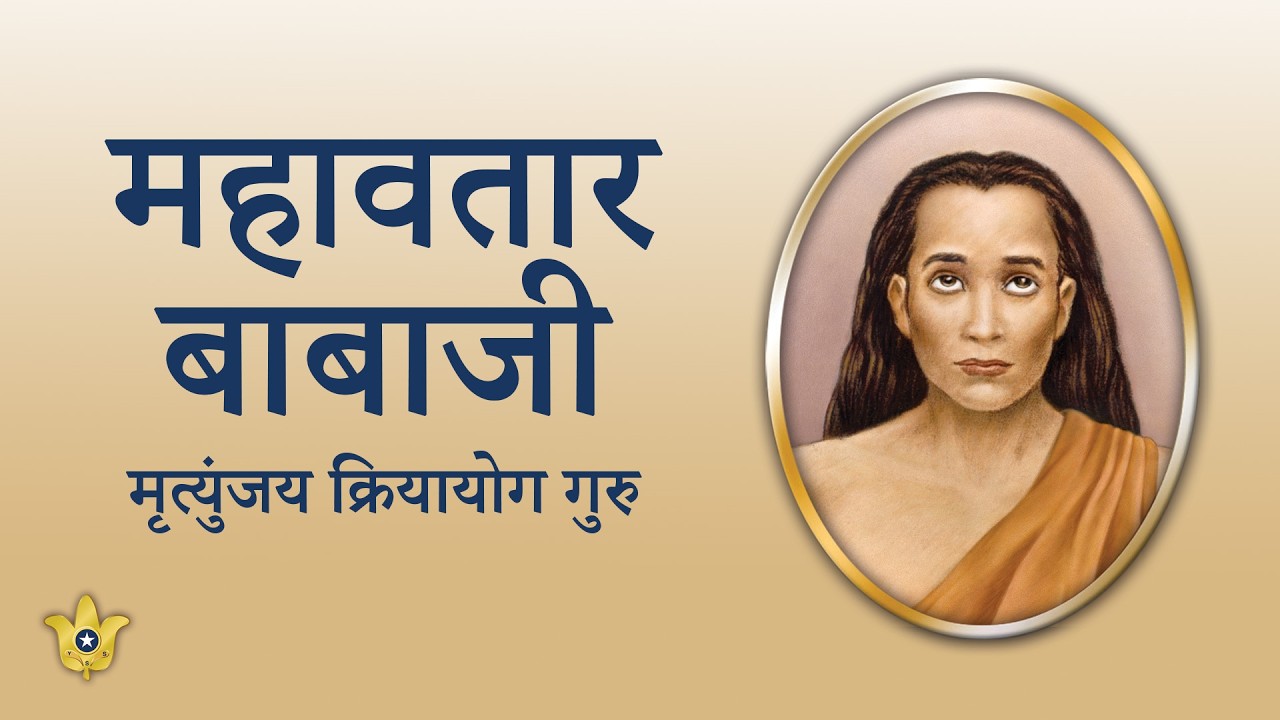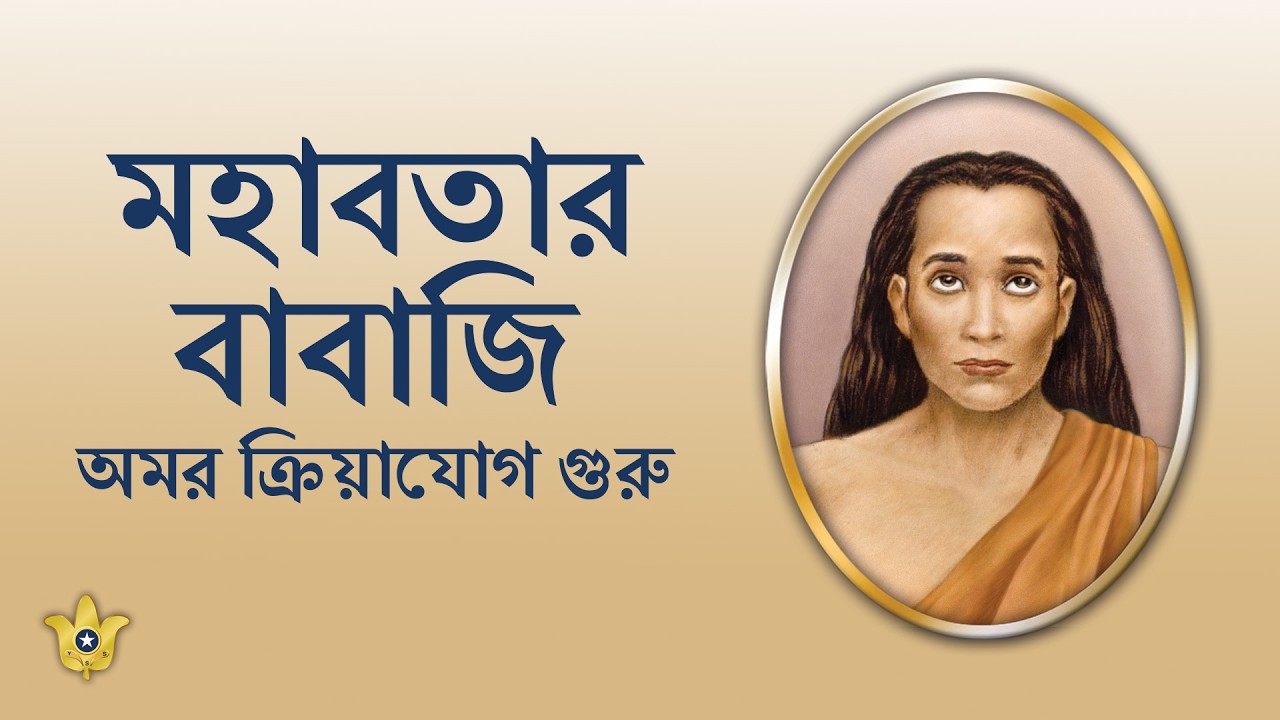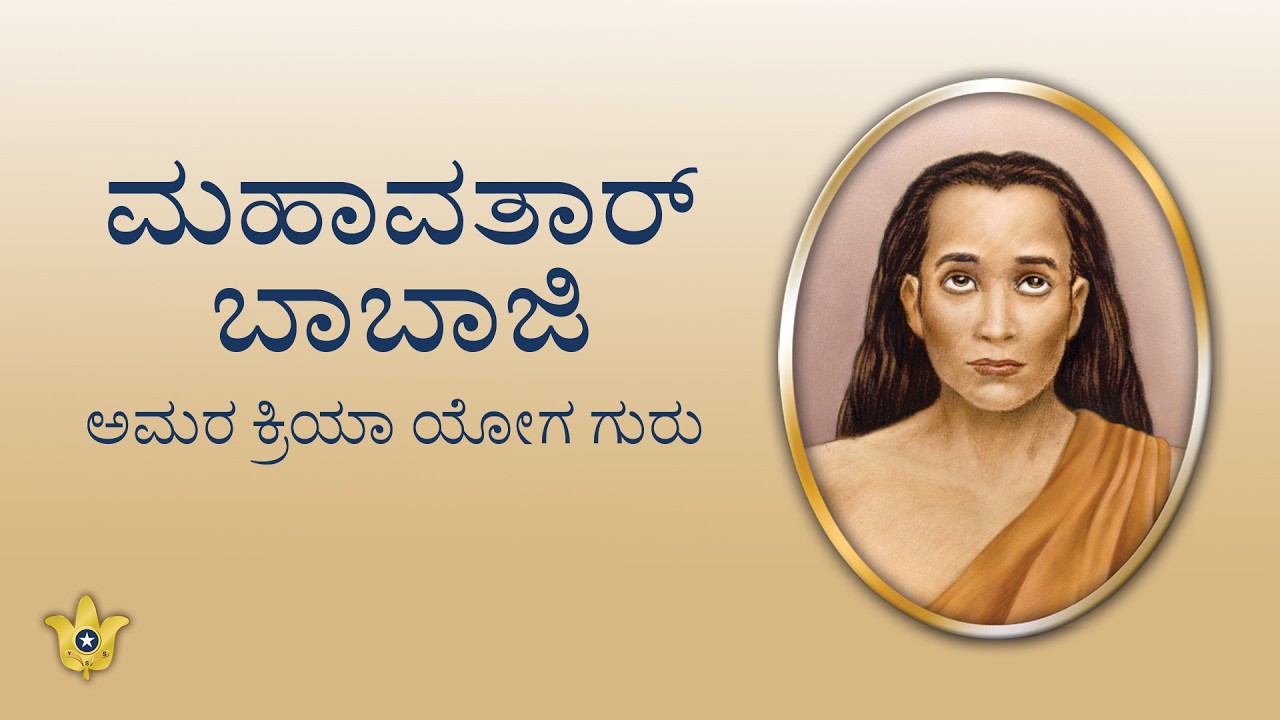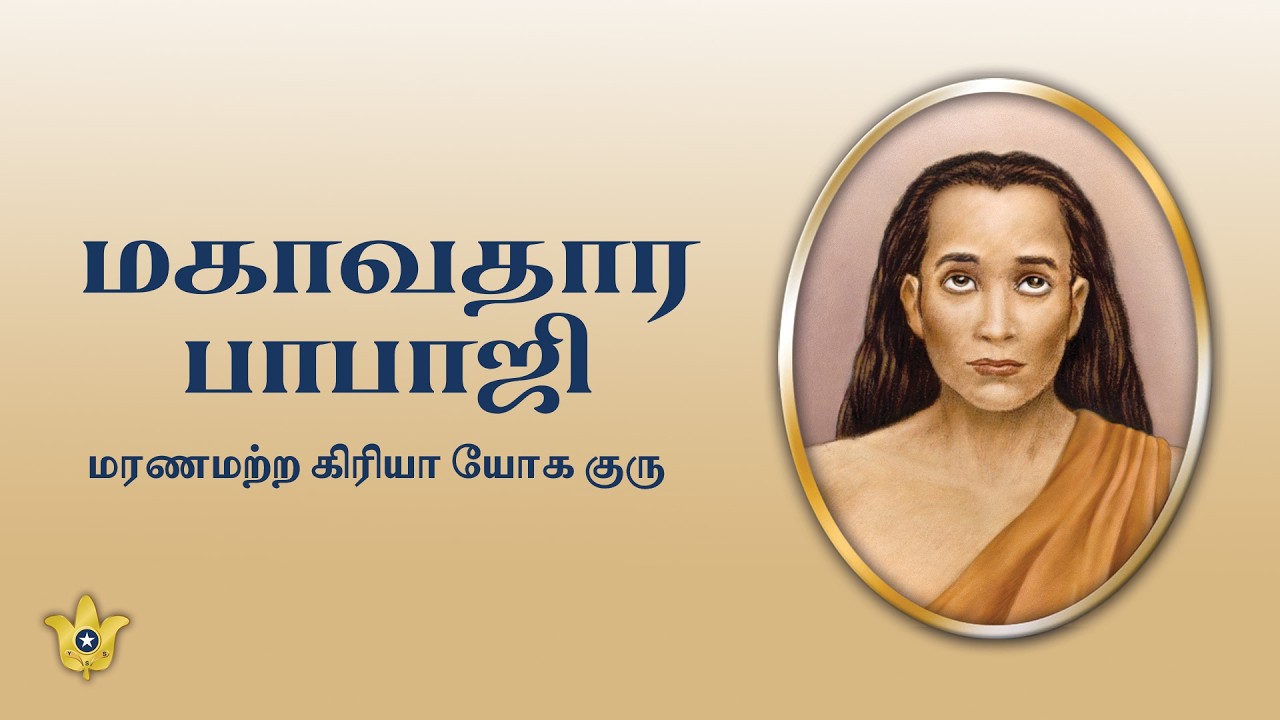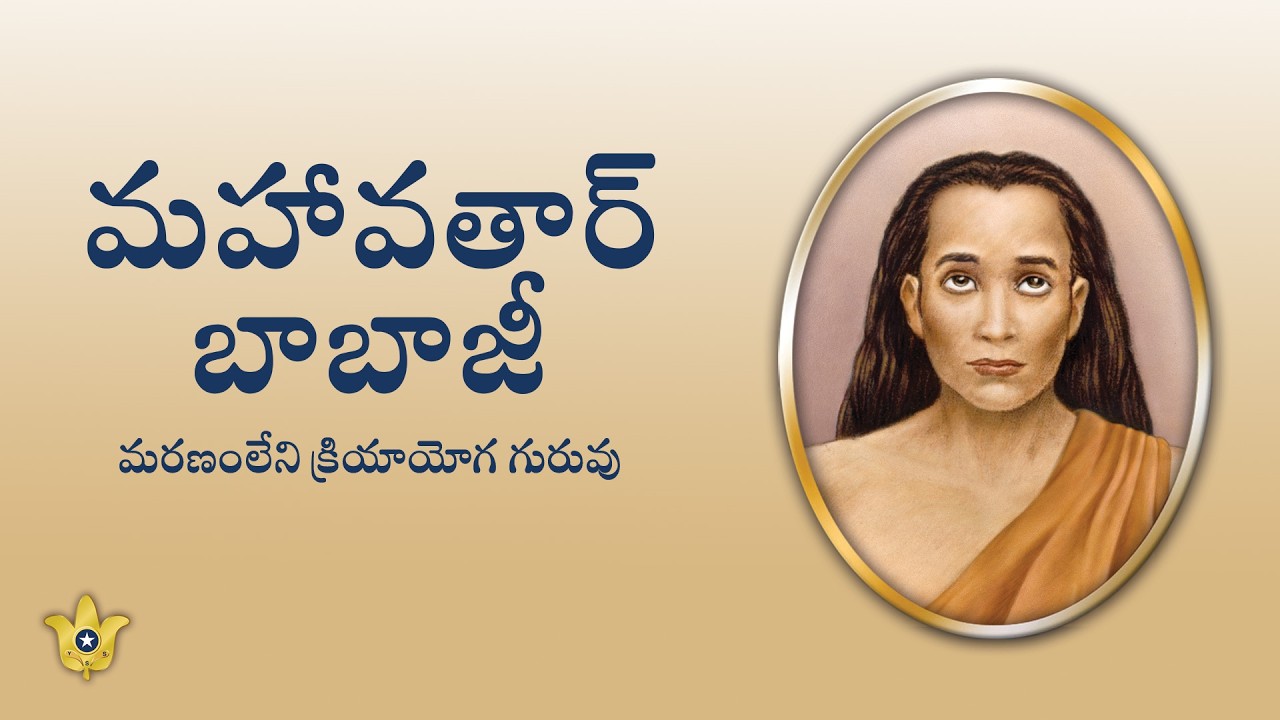
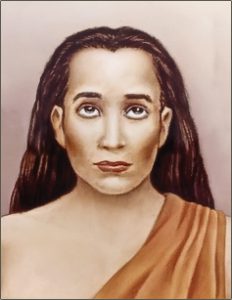
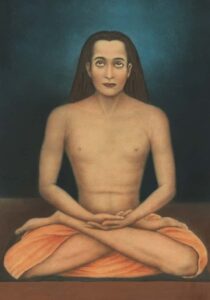
Mahavatar Babaji — the great deathless yogi — revived in 1861 the ancient science of Kriya Yoga, an age-old technique of Self-realization for the upliftment of human consciousness, by bestowing it to his disciple Lahiri Mahasaya. He is the Supreme Guru in the exalted line of YSS/SRF gurus, a divine incarnation whose mission has been to assist prophets in carrying out their special dispensations.

Babaji is silently guiding the spiritual evolution of humanity. Those who met him say that his nature is pure love, and humility is his hallmark. Just uttering his holy name with reverence is said to attract an instant blessing.

About Mahavatar Babaji

The Northern Himalayan crags near Badrinarayan are still blessed by the living presence of Babaji, the revered guru of Lahiri Mahasaya. The secluded saint has retained his physical form for centuries, perhaps for millenniums. The deathless Babaji is an avatara. This Sanskrit word means ‘descent’; its roots are ava, ‘down,’ and tri, ‘to pass’. In the Hindu scriptures, avatara signifies the descent of Divinity into flesh.

— Paramahansa Yogananda in Autobiography of a Yogi


It was through Paramahansa Yogananda’s Autobiography of a Yogi that the world came to know of Mahavatar Babaji, a truly awe-inspiring spiritual figure. Paramahansaji writes in his autobiography, “No limiting facts about Babaji’s family or birthplace, dear to the annalist’s heart, have ever been discovered.” And he continues, “Does it matter that we know not the patronymic of a fully released master?”

“…His speech is generally in Hindi, but he converses easily in any language. He has adopted the simple name Babaji (Revered Father), though disciples also call him Mahavatar (Great Avatar), Maha Yogi, the Great Yogi.”

While there are no historical records relating to the birth and life of Mahavatar Babaji, Yoganandaji has written in his Autobiography of a Yogi that the deathless avatar has resided for untold years in the remote Himalayan regions of India, revealing himself only rarely to a blessed few.

The deathless Guru bears no mark of age on his body; he appears to be a youth of not more than twenty-five. Fair-skinned, of medium build and height, Babaji’s beautiful, strong body radiates a perceptible glow. His eyes are dark, calm and tender; his long, lustrous hair is copper-coloured.


Babaji can be seen or recognized by others only when he so desires…. Babaji has been chosen by God to remain in his body for the duration of this particular world cycle. Ages will come and go — still the deathless master, beholding the drama of the centuries, shall be present on this stage terrestrial.

Babaji’s mission in India has been to assist prophets in carrying out their special dispensations. He thus qualifies for the scriptural classification of Mahavatar (Great Avatar). He has stated that he gave yoga initiation to Shankara, reorganiser of the Swami Order, and to Kabir, famous medieval master. The chief nineteenth-century disciple was, as we know, Lahiri Mahasaya, revivalist of the lost Kriya art.

“Babaji’s spiritual state is beyond human comprehension. The dwarfed vision of men cannot pierce to his transcendental star. One attempts in vain even to picture the avatar’s attainment. It is inconceivable.”

— Swami Sri Yukteswar in Autobiography of a Yogi

“Whenever anyone utters with reverence the name of Babaji…that devotee attracts an instant spiritual blessing.”

— Lahiri Mahasaya in Autobiography of a Yogi

We invite you to read the chapter from Paramahansaji’s spiritual classic Autobiography of a Yogi that describes in depth the spiritual stature and special role of Mahavatar Babaji. Learn more about this great soul who works to uplift the world and has promised to continually help seekers on the Kriya Yoga path.

To know more about the life and teachings of Mahavatar Babaji, we invite you to watch online talks by sannyasis of Yogoda Satsanga Society of India, available in six Indian languages: English, Hindi, Bengali, Kannada, Tamil, and Telugu.

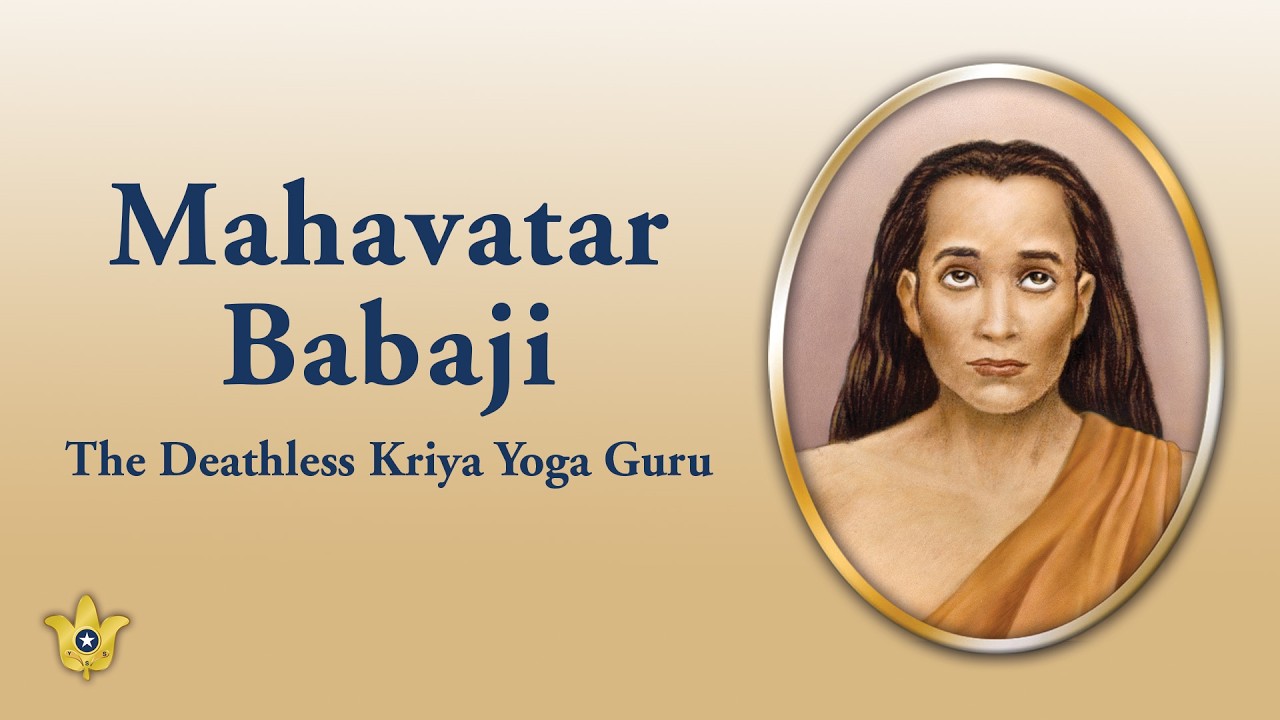
The Deathless Kriya Yoga Guru: Mahavatar Babaji
Revival of the Science of Kriya Yoga

Kriya Yoga is one of the most ancient and practical techniques of God-realization ever given to humanity. It works directly on the life force — the prana — in the spine, accelerating spiritual evolution in a way that ordinary methods cannot match. Gurudeva described it as the highest way to God. Kriya Yoga is the panacea for all human suffering. It was extolled in past ages by Bhagavan Krishna in the Gita and by Patanjali in the Yoga Sutras.
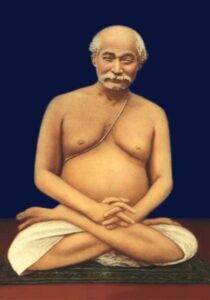
Lahiri Mahasaya
In the Bhagavad Gita, the Lord said to Arjuna:

“I gave this imperishable Yoga to Vivasvat (the sun-god); Vivasvat passed on the knowledge to Manu (the Hindu lawgiver); Manu told it to Ikshvaku (founder of the solar dynasty of the Kshatriyas). Handed down in this way in orderly succession, the Rajarishis (royal rishis) knew it. But, O Scorcher of Foes (Arjuna)! by the long passage of time, this Yoga was lost sight of on earth.” — IV:1–2

But this sacred science was lost. Through the long dark ages of materialism, the technique was either hidden away or forgotten. Generations of sincere seekers were left without this key to liberation.

Then, in this age, something extraordinary happened.

Babaji revived the technique. He chose a great householder-yogi as his instrument to begin this revival, so that Kriya Yoga might reach all — the married and the renunciants alike.

That householder-yogi was Lahiri Mahasaya.
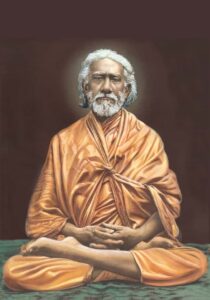
Yet Babaji also gave him the ancient rule: Kriya was to be transmitted only to those who vowed to sacrifice all in the quest of the Divine. Moved by deep compassion for the tortured men and women of the world, pursued by the threefold suffering, and who might never attempt the road to freedom if Kriya were withheld from them, Lahiri Mahasaya entreated his guru to soften these stringent conditions — that even sincere seekers not yet ready for complete inner renunciation might receive the liberating grace of Kriya Yoga.

“Be it so,” Babaji said. “The divine wish has been expressed through you. Give Kriya to all who humbly ask you for help.”

Babaji added, “Repeat to each of your disciples this majestic promise from the Bhagavad Gita: Swalpamapyasya dharmasya trayate mahato bhayat. [Even a little practice of this dharma (religious rite or righteous action) will save you from great fear (mahato bhayat) — the colossal sufferings inherent in the repeated cycles of birth and death.]”

Spread of Kriya Yoga Across the World

Lahiri Mahasaya returned to the world — to his family, his office, his ordinary life. From his home in Banaras, he quietly began initiating sincere devotees into Kriya Yoga — without fanfare, without proclamation. Among his greatest disciples was a young man named Sri Priya Nath Karar, who would come to be known as Swami Sri Yukteswar Giri.


Sri Yukteswarji was a master of profound spiritual realization — a Jnanavatar, or “incarnation of wisdom,” as Paramahansa Yoganandaji later described him — whose penetrating insight and strict spiritual discipline guided many seekers to God.

Sri Yukteswarji met Babaji himself — at a Kumbha Mela in Allahabad in 1894. Without revealing his identity, Babaji told him:

“East and West must establish a golden middle path of activity and spirituality combined. I perceive potential saints in America and Europe, waiting to be awakened. You, Swamiji, have a part to play in the coming harmonious exchange. Some years hence I shall send you a disciple whom you can train for yoga dissemination in the West.”

That disciple was Mukunda Lal Ghosh, who later became Paramahansa Yogananda.

And so the sacred torch of Kriya Yoga passed once more — from Sri Yukteswarji to the young monk who would carry it across the seas.
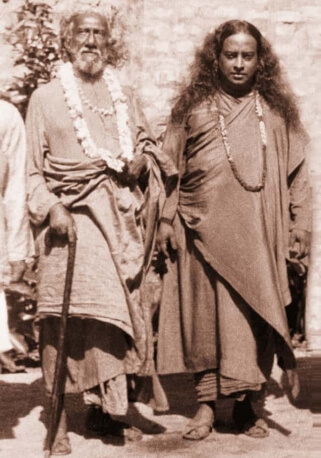
Paramahansa Yoganandaji received his training under Sri Yukteswarji’s stern and loving hand. He was not only initiated into Kriya Yoga, but also into sannyas by Swami Sri Yukteswarji. He received the unbroken stream of realization passed down through the Guru parampara.

One day in 1920, while meditating at his Ranchi ashram and school, Yoganandaji had a divine vision showing him that now was the time to begin his work in the West. He immediately departed for Calcutta, where the next day he was invited to serve as India’s delegate to an international congress of religious leaders convening later that year in Boston. Sri Yukteswar confirmed that the time was right, saying: “All doors are open for you. It is now or never.”

Shortly before his departure, Yoganandaji was visited by Mahavatar Babaji, the deathless master who revived in this age the ancient science of Kriya Yoga. “You are the one I have chosen to spread the message of Kriya Yoga in the West,” Babaji said to Yogananda. “Long ago I met your guru Yukteswar at a Kumbha Mela; I told him then I would send you to him for training. Kriya Yoga, the scientific technique of God-realization, will ultimately spread in all lands, and aid in harmonizing the nations through man’s personal, transcendental perception of the Infinite Father.”

The young swami arrived in Boston in September 1920. He went to a country that did not know Kriya Yoga, did not yet comprehend the spiritual treasure of India’s ancient wisdom — and he transformed Babaji’s sacred commission into a worldwide mission that thrives to this day.
Yoganandaji’s first speech, made to the International Congress of Religious Liberals, was on “The Science of Religion,” and was enthusiastically received. That same year he founded Self-Realization Fellowship to disseminate worldwide his teachings on India’s ancient science and philosophy of Yoga and its time-honoured tradition of meditation.

Paramahansa Yoganandaji established Yogoda Satsanga Society of India (YSS) and Self-Realization Fellowship (SRF) as the twin vehicles to fulfil Babaji’s mission in the world. YSS carries out Paramahansaji’s work in India and neighbouring countries; while SRF carries his work to the rest of the world.

From the earliest years of his mission in the West, Paramahansaji began developing a systematic course of instruction in the yoga principles and techniques that would prepare serious students for initiation in Kriya Yoga according to the requirements set in place by Babaji. He created the Yogoda Satsanga/Self-Realization Fellowship Lessons — a comprehensive home-study course that includes both the scientific techniques of Kriya Yoga meditation and principles of balanced living, designed to reach any sincere seeker anywhere in the world.

The Lessons are not simply correspondence material. They carry the living vibrations of the lineage of gurus. Through them, the Kriya Yoga technique revived by Babaji are transmitted in their original, undiluted form — protected from distortion, and preserved with fidelity. Our Guru, Yoganandaji thus enabled a direct, personal relationship between the seeker and the Guru-parampara, without necessarily requiring a face-to-face meeting.

Through these Lessons, Gurudeva Paramahansa Yoganandaji has made the soul-liberating technique of Kriya Yoga universally available — to every sincere spiritual aspirant.

The YSS/SRF Lessons offer an authentic doorway. They present the sacred teachings of Kriya Yoga as preserved and transmitted through the line of gurus — Mahavatar Babaji, Lahiri Mahasaya, Swami Sri Yukteswar, and Paramahansa Yogananda. Not because of any organizational claim, but because this is precisely the channel through which Babaji ordained that these teachings be given to the world.

“As a matter of special divine dispensation, through Krishna, Christ, Mahavatar Babaji, Lahiri Mahasaya, and Swami Sri Yukteswar I was selected to spread the Kriya Yoga science worldwide through the united original yoga of Krishna and original Christianity of Christ as represented in the teachings of Yogoda Satsanga Society of India.”

— Paramahansa Yogananda

Babaji foresaw that the time was coming when this world must give up its divisiveness, its sectarian hatreds, its secularism — that along with the advance of scientific knowledge and technology in this upwardly evolving era, humankind must either learn to live together or it will destroy itself. By the sending of Kriya Yoga to the West, the very essence of Truth — which has always been nurtured and protected in this spiritual motherland, India — would eventually spread like a great light over the whole world, gradually bringing peace, understanding, unity, harmony, and brotherhood.

YSS/SRF has established a large number of ashrams, meditation centres and retreats both in India and around the globe that serve as spiritual havens, disseminating the ancient scientific techniques of Kriya Yoga, and continuing to guide millions in their journey to Self-realization.

YSS and SRF together serve devotees in over 175 countries. Paramahansa Yoganandaji’s Autobiography of a Yogi — through which the world first learned of Babaji — has been translated into more than 50 languages and is regarded as one of the most famous spiritual books of the 20th century. Countless Kriya Yogis practise the sacred technique daily in either their homes, or at YSS/SRF meditation centres and ashrams across the world.

“This work has been sent by God to India, to America, to the world, through Babaji, Lahiri Mahasaya, and my gurudeva, Sri Yukteswarji. You will see that in the beginning it will start as a gentle zephyr. Gradually it will become a stronger breeze. In time it will become a mighty wind, a force that will do tremendous good in sweeping away the impurities of this world of maya.”

— Paramahansa Yogananda

Mahavatar Babaji’s Cave

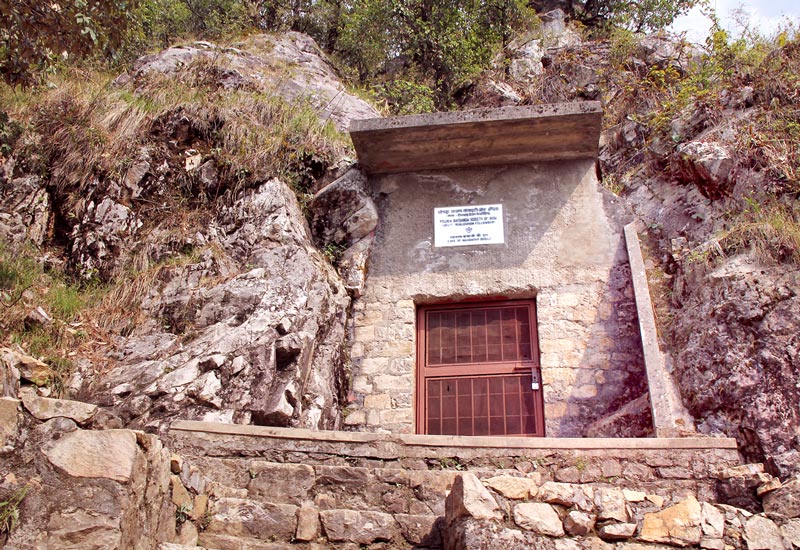
The revival of Kriya Yoga by Mahavatar Babaji in 1861 marked a turning point in the spiritual history of the modern age. This celestial event took place in a small cave in the lap of the scenic Dunagiri mountains, nestled in the Kumaon region of the Himalayas. In this sacred cave, Mahavatar Babaji initiated his exalted disciple, Lahiri Mahasaya, into the ancient science of Kriya Yoga. All Kriya Yogis trace their lineage to this event.

Mahavatar Babaji’s cave
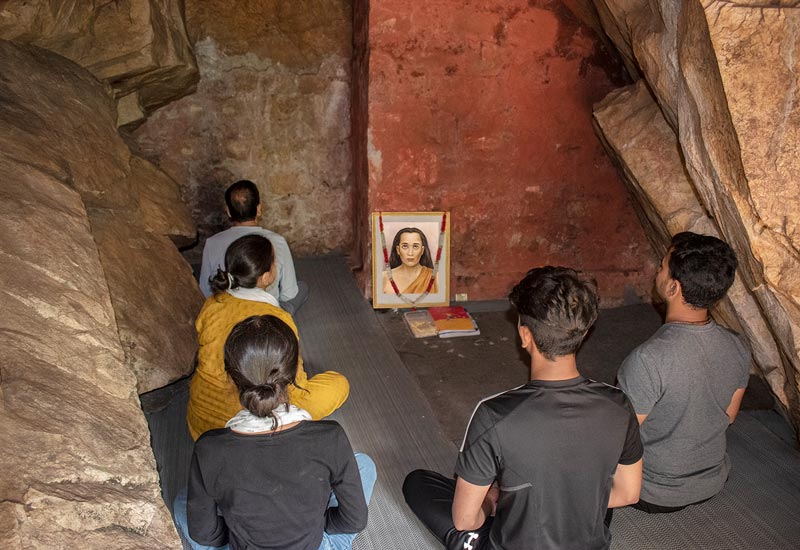
Devotees meditating in Babaji's cave
Devotees meditating in the sacred cave

The blessings of Mahavatar Babaji and Lahiri Mahasaya still permeate this holy cave and the surrounding area.

To know the wondrous story of Lahiri Mahasaya’s first meeting with his Divine Guru at this cave, rekindling the memories of his past life, and to understand the historical significance of the cave, it is suggested that the reader go through Chapter 34, “Materializing a Palace in the Himalayas,” from Autobiography of a Yogi.

If you would like to plan a visit to Mahavatar Babaji’s cave in the Himalayas, please contact Yogoda Satsanga Sakha Ashram in Dwarahat.

A Blessing from Mahavatar Babaji

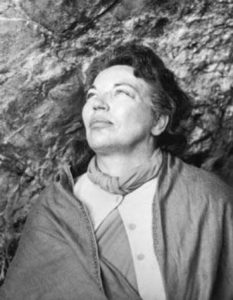
During her visit to Mahavatar Babaji’s cave in 1963–64, Sri Daya Mata (third president and sanghamata of YSS/SRF from 1955 until her passing in 2010) had a divine experience with the great Guru, which she vividly described in her book Only Love. An excerpt is shared below:

Sri Daya Mata in deep divine communion at the cave of Mahavatar Babaji, 1963

“…the whole room was lit suddenly with a golden light. The light became a brilliant blue, and there again was the presence of our beloved Babaji! This time he said: ‘My child, know this: it is not necessary for devotees to come to this spot to find me. Whoever goes within with deep devotion, calling and believing in me, will find my response.’…

“Then I said, ‘Babaji, my Lord, our Guru taught us that whenever we want to feel wisdom, we should pray to Sri Yukteswarji, because he is all jnana, all wisdom; and whenever we want to feel ananda or bliss, we should commune with Lahiri Mahasaya. What is your nature?’ As I said it, oh, I felt as though my heart was going to burst with love, such love — a thousand million loves rolled into one! He is all love; his whole nature is prem (divine love).

“Though unvoiced, a more eloquent response I could not conceive; yet Babaji made it even sweeter and more meaningful as he added these words: ‘My nature is love; for it is love alone that can change this world.’”

Stories on Mahavatar Babaji (from Autobiography of a Yogi)

Paramahansa Yogananda, in Chapter 33 of Autobiography of a Yogi, narrated some interesting stories on the life of Mahavatar Babaji. Three of them are reproduced below. The first two stories were narrated by Swami Kebalananda, Paramahansa Yogananda’s Sanskrit tutor, who had spent some time with Babaji in the Himalayas. The third story was narrated to Yoganandaji by Sri Ram Gopal Muzumdar, referred to as the “sleepless saint” in Autobiography of a Yogi.

Kebalanandaji told Paramahansaji:

“Two amazing incidents of Babaji’s life are known to me” Kebalananda went on. “His disciples were sitting one night around a huge fire which was blazing for a sacred Vedic ceremony. The master suddenly seized a burning log and lightly struck the bare shoulder of a chela who was close to the fire.

“‘Sir, how cruel!’ Lahiri Mahasaya, who was present, made this remonstrance.

“‘Would you rather have seen him burned to ashes before your eyes, according to the decree of his past karma?’

“With these words Babaji placed his healing hand on the chela’s disfigured shoulder. ‘I have freed you tonight from painful death. The karmic law has been satisfied through your slight suffering by fire.’”

“On another occasion Babaji’s sacred circle was disturbed by the arrival of a stranger. He had climbed with astonishing skill to the nearly inaccessible ledge near the guru’s camp.

“‘Sir, you must be the great Babaji.’ The man’s face was lit with inexpressible reverence. ‘For months I have pursued a ceaseless search for you among these forbidding crags. I implore you to accept me as a disciple.’

“When the great guru made no response, the man pointed to the rocky chasm at his feet. ‘If you refuse me, I will jump from this mountain. Life has no further value if I cannot win your guidance to the Divine.’

“‘Jump then,’ Babaji said unemotionally. ‘I cannot accept you in your present state of development.’

“The man immediately hurled himself over the cliff. Babaji instructed the shocked disciples to fetch the stranger’s body. When they returned with the mangled form, the master placed his divine hand on the dead man. Lo! he opened his eyes and prostrated himself humbly before the omnipotent guru.

“‘You are now ready for discipleship.’ Babaji beamed lovingly on his resurrected chela. ‘You have courageously passed a difficult test. Death shall not touch you again; now you are one of our immortal flock.’ Then he spoke his usual words of departure, ‘Dera danda uthao’; the whole group vanished from the mountain.”

During my visit at Ranbajpur with Ram Gopal, “the sleepless saint,” he related the wondrous story of his first meeting with Babaji.

“I sometimes left my isolated cave to sit at Lahiri Mahasaya’s feet in Benares,” Ram Gopal told me. “One midnight as I was silently meditating in a group of his disciples, the master made a surprising request.

“‘Ram Gopal,’ he said, ‘go at once to the Dasaswamedh bathing ghat.’

“I soon reached the secluded spot. The night was bright with moonlight and the glittering stars. After I had sat in patient silence for a while, my attention was drawn to a huge stone slab near my feet. It rose gradually, revealing an underground cave. As the stone remained balanced in some unknown manner, the draped form of a young and surpassingly lovely woman was levitated from the cave high into the air. Surrounded by a soft halo, she slowly descended in front of me and stood motionless, steeped in an inner state of ecstasy. She finally stirred, and spoke gently.

“‘I am Mataji, the sister of Babaji. I have asked him and also Lahiri Mahasaya to come to my cave tonight to discuss a matter of great importance.’

“A nebulous light was rapidly floating over the Ganges; the strange luminescence was reflected in the opaque waters. It approached nearer and nearer until, with a blinding flash, it appeared by the side of Mataji and condensed itself instantly into the human form of Lahiri Mahasaya. He bowed humbly at the feet of the woman saint.

“Before I had recovered from my bewilderment, I was further wonder-struck to behold a circling mass of mystical light travelling in the sky. Descending swiftly, the flaming whirlpool neared our group and materialized itself into the body of a beautiful youth who, I understood at once, was Babaji. He looked like Lahiri Mahasaya, the only difference being that Babaji appeared much younger, and had long, bright hair.

“Lahiri Mahasaya, Mataji, and myself knelt at the guru’s feet. An ethereal sensation of beatific glory thrilled every fibre of my being as I touched his divine flesh.

“‘Blessed sister,’ Babaji said, ‘I am intending to shed my form and plunge into the Infinite Current.’

“‘I have already glimpsed your plan, beloved master. I wanted to discuss it with you tonight. Why should you leave your body?’ The glorious woman looked at him beseechingly.

“‘What is the difference if I wear a visible or invisible wave on the ocean of my Spirit?’

“Mataji replied with a quaint flash of wit. ‘Deathless guru, if it makes no difference, then please do not ever relinquish your form.’

“‘Be it so,’ Babaji said solemnly. ‘I will never leave my physical body. It will always remain visible to at least a small number of people on this earth. The Lord has spoken His own wish through your lips.’

“As I listened in awe to the conversation between these exalted beings, the great guru turned to me with a benign gesture.

“‘Fear not, Ram Gopal,’ he said, ‘you are blessed to be a witness at the scene of this immortal promise.’

“As the sweet melody of Babaji’s voice faded away, his form and that of Lahiri Mahasaya slowly levitated and moved backward over the Ganges. An aureole of dazzling light surrounded their bodies as they vanished into the night sky. Mataji’s form floated to the cave and descended; the stone slab came down and closed over the cave, as if moved by invisible hands.

“Infinitely inspired, I wended my way back to Lahiri Mahasaya’s place.”

Mahavatar Babaji Smriti Divas

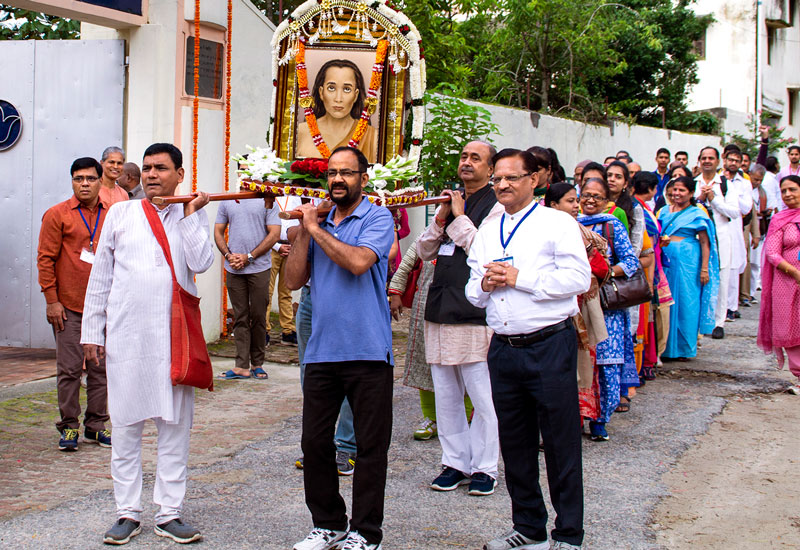
Mahavatar Babaji Smriti Divas is commemorated on July 25 every year, marking the sacred meeting between Mahavatar Babaji and Paramahansa Yogananda, when Babaji entrusted Paramahansaji with the mission of spreading the teachings of Kriya Yoga worldwide.

A special commemoration (that includes periods of meditation, inspirational reading, and chanting) is conducted at the YSS ashrams and centres to mark this sacred day. It is also live-streamed from one of the YSS ashrams for devotees to participate online.

Prabhat pheri during Mahavatar Babaji Smriti Divas

Share this on